
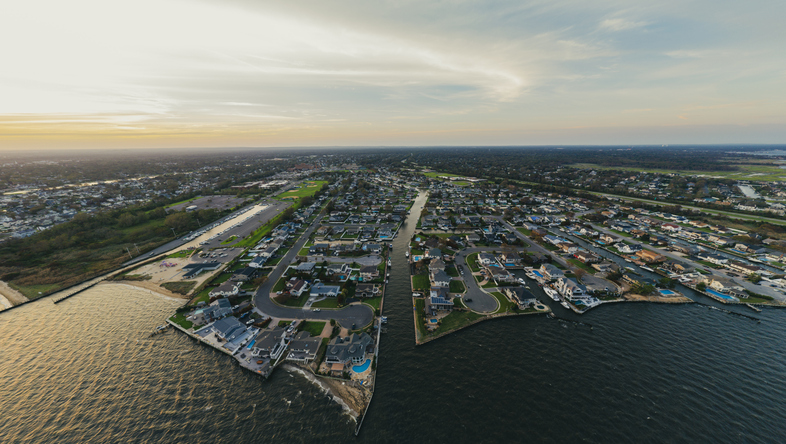

Long Island has done it again—but not in the “beaches and bagels” way locals like to brag about. According to a new analysis highlighted by CBS News, the seven most expensive places to live in New York State—all towns with populations over 2,500—are all located on Long Island. That’s right: not just the top spot, not just the top three, but a full sweep of the leaderboard.
The ranking comes from GoBankingRates, which analyzed 2025 average home values, monthly mortgage obligations, and annual spending on essentials like groceries, utilities, healthcare, and transportation. The result is a report that reads less like housing data and more like a warning label for anyone attempting to live there without generational wealth, a Wall Street bonus, or a startup exit in their rearview mirror.
The Hard Numbers (Brace Yourself)
The undisputed champion of financial pain is Sands Point, a North Shore enclave known for sprawling estates and the kind of quiet wealth that doesn’t need Instagram.
Here’s what the study revealed:
-
Average home value: ~$2.99 million
-
Monthly mortgage payment: ~$14,787
-
Annual cost of “necessities”: ~$209,951
-
Annual combined cost of living: Enough to make even high earners consider a second job
And that’s just the starting point. Rounding out the list are Old Westbury, Muttontown, Lloyd Harbor, Manhasset, Southampton, and Montauk, forming a perfect 7–0 sweep for Long Island’s elite ZIP codes.
The first municipality not on Long Island to appear is Larchmont in Westchester County—which is still expensive by any normal metric, but honestly looks like a stellar bargain compared to Sands Point’s numbers. With a median home value of roughly $1.71 million and annual necessities hovering around $131,800, Larchmont feels like the “starter pack” version of high-end suburban living.
Why WebGeekly Readers Should Actually Care
On the surface, this looks like standard real-estate reporting. But cost-of-living has become one of the defining variables of the digital work era—one that affects everyone from software engineers to digital marketers, remote-first employees, startup founders, content creators, and the entire “make-money-online” class WebGeekly tends to attract.
Long Island’s cost profile isn’t just high; it’s aggressive. It forces anyone living there—even those making solid six-figure incomes—to rethink lifestyle, career planning, and whether geography still makes sense in a world where you can code a product, write a blog, manage a team, or run an e-commerce business from literally anywhere with stable Wi-Fi.
Let’s break down what this means in practice.
1. Remote Work Isn’t a Magical Cost Equalizer
We’re living in the era of distributed teams, hybrid offices, and asynchronous everything. In theory, that gives workers freedom. But if you’re racking up over $200,000 a year in “necessities,” that freedom evaporates fast.
Remote flexibility can make life easier—but it can’t counteract the gravitational pull of housing costs, taxes, childcare, transportation, and medical expenses that are uniquely high in places like Nassau and Suffolk.
2. High Real-Estate Prices Restrict Innovation
If your mortgage is $14,787 a month, are you really going to take the risk of building an app? Launching a creative business? Bootstrapping a SaaS idea? Probably not.
Many of the most successful digital creators and startup founders today started in low-cost environments where failing wasn’t financially catastrophic. When the cost of living is essentially a second salary, experimentation dies.
3. Digital Asset Growth vs. Physical Asset Burden
A $3 million house may appreciate over time—but digital assets (websites, SaaS tools, newsletters, online courses, niche blogs) often have a far better risk-to-reward ratio and don’t come with property taxes that look like college tuition.
For many tech-forward professionals, choosing a lower-cost state or region means more money flowing into:
-
startup runway
-
paid traffic
-
outsourcing
-
AI tools
-
education
-
long-term digital growth
In high-cost regions like Long Island, those dollars instead go to keeping the lights on—literally and figuratively.
4. High-Cost Regions Are Losing Their Talent Grip
At one point, expensive areas could justify their price tags with opportunity, proximity, and density. But when companies from Meta to mid-size agencies are hiring remote-first globally, a $200,000 cost of living doesn’t buy you a career advantage anymore.
5. The Psychological Price of High-Cost Living
There’s a real emotional toll to living in a place where the cost of groceries feels like a hostile negotiation, traffic is a full-contact sport, and housing feels attainable only after winning a lawsuit or selling a kidney on the digital black market.
In contrast, affordable states and mid-size cities are attracting creative professionals precisely because they offer mental space—literally and financially—to experiment.
The Real Bottom Line
Long Island may offer beautiful neighborhoods, strong school districts, and proximity to New York City—but financially, it’s playing in a league of its own. For tech professionals, digital nomads, content creators, and online entrepreneurs, the message is simple: just because you can work from Long Island doesn’t mean it offers the best environment for building long-term digital success.
When “necessities” alone cost more than many Americans earn in a year, the question becomes not whether you can afford Long Island—but whether you can afford the opportunities you’ll miss by living there.
A Quick Note for Long Island Residents
High-cost living isn’t the only challenge facing locals. The region’s dense traffic corridors, aggressive commuting patterns, and frequent roadway congestion lead to a significant number of serious crashes each year. If you or someone you know has been injured, it may be worthwhile to explore legal support for Long Island residents to ensure your rights are protected and any compensation owed to you is properly pursued.