
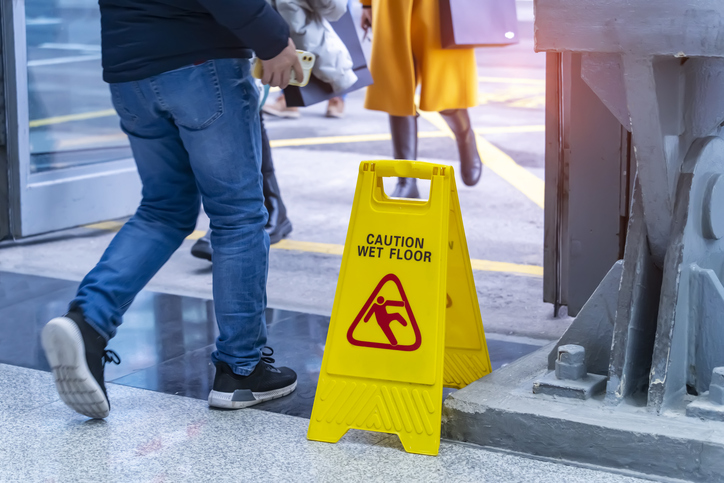

Walk into any emergency room in America on a winter evening, and you’ll witness a parade of casualties from an epidemic hiding in plain sight. Fractured wrists, shattered hips, traumatic brain injuries—all from something as mundane as losing your footing. While Americans obsess over exotic health threats, the humble slip and fall has quietly become one of the nation’s most devastating public health crises, costing billions in medical expenses and leaving a trail of permanently disabled victims in its wake.
The statistics are staggering. According to the National Floor Safety Institute, falls account for over 8 million hospital emergency room visits annually, representing the leading cause of visits at 21.3%. Slip and falls alone account for more than 1 million of these visits. But raw numbers barely scratch the surface of what’s happening across America’s sidewalks, parking lots, grocery stores, and office buildings.
The Hidden Mathematics of Broken Bodies
The Centers for Disease Control and Prevention reports that one out of five falls causes a serious injury such as broken bones or a head injury. Each year, 3 million older adults are treated in emergency departments for fall injuries. More than 95% of hip fractures are caused by falling, typically by falling sideways.
These aren’t just unfortunate accidents—they’re preventable tragedies with life-altering consequences. A hip fracture for a person over 65 often marks the beginning of a devastating decline. Studies published in the Journal of the American Medical Association show that mortality rates spike dramatically in the year following a serious fall, with many victims never regaining their previous level of independence.
The financial toll is equally catastrophic. The National Safety Council estimates that in 2021, falls resulted in $50 billion in medical costs and lost work time. Individual victims face average medical expenses exceeding $30,000 for serious fall injuries, not counting lost wages, rehabilitation costs, or long-term care needs. For families without adequate insurance or savings, a single slip can trigger bankruptcy.
Where the Danger Lurks
Not all surfaces are created equal when it comes to fall risk. Parking lots represent particular hazards, especially during weather transitions when ice, snow, and water create treacherous conditions. The Occupational Safety and Health Administration has identified walking and working surfaces as leading sources of serious injuries and fatalities across industries, with slips, trips, and falls constituting the majority of general industry accidents.
Retail environments present their own unique dangers. Grocery stores, with their combination of smooth floors, produce sections that generate moisture, and constant customer traffic, create perfect conditions for slip and fall incidents. The U.S. Bureau of Labor Statistics data shows that falls on the same level account for a significant percentage of nonfatal occupational injuries requiring days away from work.
Restaurant dining areas and kitchens are similarly hazardous. Spills, wet floors from mopping, and the urgency of food service operations create circumstances where employees and customers alike face elevated risk. Commercial property owners have legal obligations to maintain safe premises, yet enforcement of these standards remains inconsistent.
The Property Owner’s Dilemma
Property owners and business operators exist in a precarious position. On one hand, they face genuine liability when customers or visitors are injured on their premises. On the other, the cost of implementing comprehensive fall prevention measures—proper drainage, anti-slip coatings, adequate lighting, regular inspections, immediate spill response—can seem prohibitive, especially for small businesses operating on thin margins.
This creates a dangerous calculus where short-term cost savings trump long-term risk management. A commercial property owner might delay replacing worn flooring or skip regular surface treatments to preserve quarterly profits, not realizing they’re accumulating catastrophic liability. When serious injuries occur, the resulting lawsuits often dwarf what proper prevention would have cost.
Premises liability law, governed largely by state statutes and case law, generally requires property owners to maintain their property in a reasonably safe condition and warn visitors of known hazards. The American Bar Association notes that slip and fall cases have become increasingly complex, involving detailed analysis of property maintenance records, surveillance footage, and expert testimony about industry standards.
The Insurance Company Shell Game
When someone does suffer a serious slip and fall injury, they immediately enter a labyrinthine world of insurance claims, liability disputes, and adversarial negotiations. Property owners typically carry liability insurance precisely for these scenarios, but insurance companies have refined the art of minimizing payouts.
Adjusters quickly descend on accident scenes, gathering evidence to dispute causation or shift blame to the victim. Was the hazard “open and obvious”? Was the victim wearing appropriate footwear? Were they distracted by a phone? Insurance companies deploy teams of investigators and lawyers whose sole purpose is finding reasons to deny claims or drastically reduce settlement amounts.
Victims without legal representation routinely accept settlements that cover only a fraction of their medical bills, unaware of the full extent of their rights or the long-term costs they’ll face. The Insurance Information Institute data shows that personal injury claims with attorney representation typically result in settlements three to four times higher than those negotiated directly by claimants—even after attorney fees.
Medical Nightmares That Outlast the Headlines
The physical impact of a serious fall extends far beyond the initial emergency room visit. Traumatic brain injuries from head impacts can cause cognitive impairment that persists for years or even permanently. The Brain Injury Association of America reports that falls are the leading cause of TBI, accounting for nearly half of all TBI-related hospitalizations.
Spinal injuries from falls can result in chronic pain, limited mobility, and in severe cases, paralysis. Fractures that don’t heal properly lead to arthritis and permanent disability. Elderly victims face particularly grim prospects—research from the National Institutes of Health indicates that older adults who experience a serious fall often never return to their previous level of function, entering a cycle of declining mobility and increasing care needs.
Psychological trauma compounds physical injuries. Post-traumatic stress, anxiety about falling again, and depression are common among fall victims. The cascade of consequences—inability to work, mounting medical debt, strained family relationships, loss of independence—can be as devastating as the physical injuries themselves.
The Legal Landscape: Getting What You’re Actually Owed
Many slip and fall victims don’t realize they have legal recourse, or they assume that filing a claim is too complicated, expensive, or adversarial to be worthwhile. This misconception costs them dearly. Property owners and their insurance companies count on victims’ ignorance and intimidation to escape full accountability.
Experienced personal injury attorneys understand the technical aspects of premises liability law, know how to document conditions that caused the fall, can identify all potentially liable parties, and have the resources to fight insurance company tactics. They work with medical experts to establish the full scope of injuries, with economists to calculate lifetime costs, and with investigators to gather evidence that insurance adjusters might overlook or suppress.
The difference between handling a claim independently and working with skilled legal counsel often means the difference between covering immediate medical bills and securing compensation that addresses long-term care needs, lost earning capacity, and the full impact on quality of life. For victims in Georgia dealing with the aftermath of a serious fall, the decision to Contact Simon Bridgers Spires today can fundamentally alter their financial recovery and access to necessary medical treatment.
Prevention: The Crisis We Could Actually Solve
Unlike many public health challenges, slip and fall injuries are eminently preventable with existing technology and knowledge. We know what works: proper surface materials, adequate drainage, prompt spill response, appropriate lighting, regular maintenance, clear warning signage. The National Institute for Occupational Safety and Health has published extensive research on effective fall prevention strategies.
The problem isn’t knowledge—it’s implementation. Economic incentives currently favor reactive rather than proactive approaches. Property owners are incentivized to minimize upfront costs, even when this increases long-term liability. Insurance premiums don’t adequately reflect the true cost difference between well-maintained and poorly maintained properties.
Regulatory enforcement remains spotty. Building codes address some safety elements, but ongoing maintenance and operational practices vary wildly. Without consistent standards and meaningful penalties for non-compliance, preventable falls will continue to devastate lives and drain resources.
The Cost of Inaction
Every day that passes without meaningful reform adds to the toll. More fractured hips. More traumatic brain injuries. More families financially ruined by medical debt. More elderly Americans losing their independence and entering nursing homes prematurely.
The societal costs extend beyond individual tragedies. Medicare and Medicaid bear enormous expenses from fall-related injuries. Productivity losses ripple through the economy. Emergency rooms remain clogged with preventable cases. Insurance premiums rise to cover escalating claims.
We have the knowledge and technology to dramatically reduce slip and fall injuries. What’s missing is the collective will to prioritize prevention over profit, to enforce standards over accepting casualties, to treat premises safety as a public health imperative rather than a private concern.
Moving Forward
For individuals, the message is clear: take falls seriously. Document conditions if you’re injured. Seek immediate medical attention. Understand your legal rights. Don’t accept insurance company lowball offers without consulting someone who works for your interests, not theirs.
For property owners, the mathematics favor prevention. The cost of proper maintenance, appropriate surfaces, adequate lighting, and prompt hazard response is a fraction of what a single serious injury lawsuit will cost—not to mention the human toll of knowing your negligence caused someone’s suffering.
For policymakers, the path forward requires stronger enforcement of existing standards, clearer liability frameworks that incentivize prevention, and public awareness campaigns that help people understand both risks and rights.
The slip and fall epidemic is solvable. The question is whether we value prevention enough to actually solve it, or whether we’ll continue accepting preventable tragedies as the cost of doing business. The answer will be measured in broken bones and broken lives, in billions of dollars and shattered families, in a crisis we saw coming but failed t