
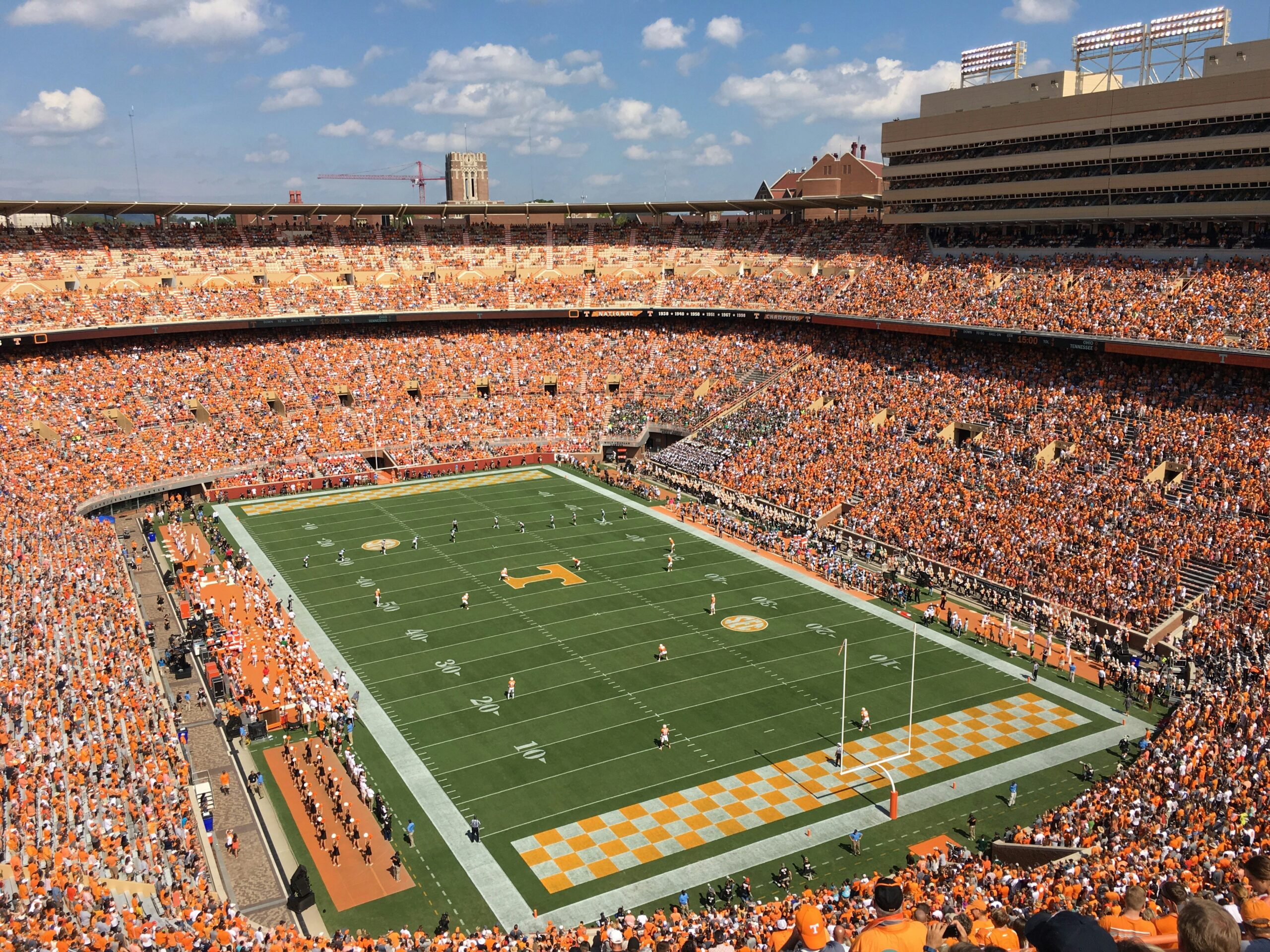

The 2026 college football season hasn’t even finished its opening weeks, and the injury list already reads like a midseason casualty report. Across Power Four programs, a wave of season-ending knee injuries — several of them torn ACLs — has sidelined key starters before fans even got a full look at their teams. It’s prompted an obvious question among fans and sports-medicine watchers alike: is this just bad luck, or is something structural going on?
The damage so far
Heading into the season, injury trackers already show a striking number of programs losing significant contributors to season-ending injuries:
- Florida State: cornerback Karson Hobbs — torn ACL, season-ending
- Tennessee: safety Edrees Farooq — torn patella tendon, season-ending
- USC: center Kilian O’Connor — knee injury, season-ending
- South Carolina: two separate wide receivers, Jayden Sellers and Jayden Gibson, both out with season-ending lower-body injuries, plus edge rusher Dylan Stewart dealing with a back issue
- Maryland: edge rusher Zahir Mathis — knee injury, season-ending
- Kansas State: offensive tackle John Pastore — season-ending lower-body injury
That’s six-plus Power Four programs that have already lost a starter for the entire year, concentrated overwhelmingly at positions requiring explosive cutting and change-of-direction — cornerback, receiver, edge rusher — exactly the movement patterns most associated with non-contact ACL tears.
Is this actually a trend, or just this season?
It’s a fair question, and the research suggests it’s more than noise. A peer-reviewed study on Division I collegiate athletes published in the National Institutes of Health’s PubMed Central database found meaningful year-over-year patterns in surgically treated ACL injury rates, and earlier NCAA Injury Surveillance System data has tracked ACL injury rates across 15 college sports over multi-year windows — the kind of longitudinal data that separates a real trend from a statistically unremarkable cluster of bad luck in a single preseason.
Several factors sports-medicine researchers point to when ACL injury rates climb:
- Turf and playing surface differences between practice facilities and game-day stadiums, which can change how cleats grip and how joints absorb force during cuts.
- Condensed offseason training windows, especially for players who transfer schools via the transfer portal and have less time to build sport-specific conditioning with a new strength staff.
- Increased game speed and athleticism at every position, meaning more force moving through the knee during typical cutting and deceleration movements than in past eras.
- Workload and fatigue management, since fatigued stabilizing muscles around the knee are less able to protect the ligament during a hard plant-and-cut.
What teams are doing about it
The athletic training community has had formal ACL injury-prevention guidance in place for years — the National Athletic Trainers’ Association’s position statement outlines specific movement-screening and neuromuscular training protocols designed to reduce non-contact ACL injury risk, particularly programs that train athletes to land and decelerate more safely. Many Power Four programs now run some version of these protocols during the offseason, including targeted strength work for the hamstrings and hips, plyometric training progressions, and movement screening to flag athletes at elevated risk before it becomes an injury.
Even so, no prevention program eliminates risk entirely in a collision sport played at increasingly high speeds — which is part of why these injuries remain a persistent storyline every season rather than a solved problem.
What it means heading into the season
For the affected programs, losing a starter at cornerback, receiver, or the offensive line before Week 1 forces immediate depth-chart shuffling and can reshape a season’s outlook before it begins — South Carolina in particular now heads into its opener down multiple receivers and facing uncertainty at edge rusher. For fans trying to make sense of why this keeps happening across the sport more broadly, the honest answer is that it’s a mix of the physical demands of the modern game and gaps in offseason preparation that even well-resourced programs haven’t fully closed.
Sources: